

Gamebook Author Spotlight

Gamebook Author Spotlight was created by Anthony Lampe, author of the Explore-A-Quest interactive adventure series. This Q&A-style interview series celebrates creators shaping the past, present, and future of interactive storytelling. The series features both legacy voices and modern innovators.
For more information about Anthony Lampe and his books, check out:
Facebook: https://www.facebook.com/anthony.lampe.5
Goodreads: https://www.goodreads.com/author/show/7279489.Anthony_Lampe
Instagram: https://www.instagram.com/anthony.lampe.author?igsh=MzRlODBiNWFlZA==
X: https://x.com/Anthony_Lampe
Amazon: Anthony Lampe's Books
Gamebook Author Spotlight #16
Paul Partington

Paul Partington, it is an honor to interview the author of several GNAT Adventure Gamebooks and Dragon Warriors Gamebooks.
1) What first inspired you to write gamebooks?
Although it is probably a cliché, my first gamebook was The Warlock of Firetop Mountain, and it is probably one of the most important books I have read. I first came across it when I was eleven, in the local library. I was instantly hooked, and borrowed the book many times before eventually buying my own copy (which I still have!). I discovered the Lone Wolf series, Endless Quest, Sorcery! and other titles as I delved further into the world of gamebooks. I decided to have a go myself, and wrote my first amateur fighting fantasy book when I was at school - I've still got the handwritten manuscript somewhere!
2) How did you become a part of the Dragon Warriors series and the GNAT Adventure Gamebooks series?
I came back to gamebooks later in life and was still fascinated by them. Once again, I had a go at writing an amateur fighting fantasy book, Village of the Damned, which had a bit of a folklore feel to it; witches, sacred oak trees, spectral hounds, that sort of thing. And then I saw that Red Ruin Publishing was putting out fan-made material, including a gamebook, and I thought that Village of the Damned would fit nicely into that setting, so I contacted them, and they were happy to publish it using the Dragon Warriors rules.
Somebody commented on my work and wondered what I could do outside of Dragon Warriors, so I thought I would give it a go. Happily enough at that time, David M Donachie, another author at Red Ruin, was developing his own rules - the GNAT system - for use in gamebooks, and so I jumped at the chance to use those, and the GNAT series came to be.
3) What can you tell me about your latest gamebook, Caverns of the Netherearth?
I've always been intrigued by the prospect of writing a book set mainly in the deep dark caverns beneath the surface. Like most of my other books, it is semi-open world, in that you can revisit areas whenever you choose. There is also a main quest, so you can feel like you've 'completed' the book. I have decided to go with a Kickstarter so that I can pay for an artist to do the illustrations: Caverns of the Netherearth - a GNAT adventure gamebook by Paul Partington — Kickstarter
The Netherearth – a world deep underground, where peril and adventure await! In these ancient caverns lie opportunities for fearless adventurers to gain glory, gold and treasure. Explore labyrinthine tunnels, where dangerous creatures lurk in the dark. Encounter the denizens of the Netherearth in their underground domains. Negotiate with fire giants in their rocky fortress on the shore of a magma lake. Discover the secrets of the decaying fungal forest. Battle against the undead king in his ruined city and fight eldritch priests in their watery temple. And, if you are resourceful and brave enough, thwart an evil plan that could bring destruction to the realms below.
YOU choose which quests to follow, where to go and what to do. YOU decide how to face the hazards and monsters that await you.
4) What advice would you give to aspiring gamebook authors?
Lots of reading! I've done vampires, ancient Egypt, Norse dragons, Celtic and Aztec mythology (not in the same book!), and of course British folklore. You never know when inspiration will strike! Of course, reading other gamebooks will give you ideas about how to structure your book, and how different authors use different mechanics.
Write about something you are passionate about. If you are really into, for example, the rebellion against King John in the 13th century, write a gamebook set in those times. Write the gamebook you want to write, not what you think other people will want - if it's your project, you will put more love into it than if you write something you think will appeal to the masses. Don't be afraid to publish your gamebook and see what people think. At worst, you'll get some feedback on how to improve. I wouldn't have been picked up by Savage Realms to write Rift- Herald of Oblivion without putting my work out there in the first place.
5) Where can readers and fellow writers of gamebooks follow you and your work?
Website: https://www.teuton.org/~stranger/gnat
Kickstarter: https://www.kickstarter.com/projects/partp/caverns-of-the-netherearth-a-gnat-adventure-gamebook?ref=user_menu
Amazon UK: Amazon.co.uk: Paul Partington: books, biography, latest update
DriveThruRPG: https://www.drivethrurpg.com/en/publisher/26531/gnat-adventure-gamebooks
Thank you again for this opportunity to ask you questions about yourself and your gamebooks, and for sharing your thoughts on the genre and your advice for new gamebook authors. I wish you the best with Caverns of the Netherearth and all your future gamebooks.
- Anthony Lampe


Gamebook Author Spotlight #15
James Schannep
.png)
James Schannep, it is an honor to be interviewing the creator of Click Your Poison.
What first drew you to the gamebook format?
I absolutely loved Choose Your Own Adventure and Goosebumps when I was a kid, but like most people, I kind of forgot about them as I grew up. A few years ago, I found myself wondering if anyone had tried creating a mature, 'grown-up' version of those branching-path stories. When I looked around, I couldn't really find what I was searching for. That's when I realized there was an open market for full-length, complex interactive fiction for teens and adults.
How did the Click Your Poison series come about?
It started as a creative pivot. I actually began my writing career working on screenplays, which went through several false starts and ultimately wound up in development hell. Around that time, self-publishing was really starting to take off. Because an 'adult Choose Your Own Adventure' series was so niche, I didn't even bother trying to query traditional publishers initially. I just jumped headfirst into indie publishing with INFECTED, treating the reader's brain like a game console where they could choose their own path through a gritty zombie apocalypse. It grew from there into mystery (MURDERED), superhero fantasy (SUPERPOWERED), the return of the walking dead (PATHOGENS), historically-accurate swashbuckling adventure (MAROONED), international spy thriller (SPIED), and supernatural horror (HAUNTED).
How has your creative process evolved while writing the Click Your Poison series?
I've always suffered from a bit of 'creativity overload,' with a nonstop analytical brain, which is actually a superpower when designing complex narratives! Over the years, my structural mapping has become much more sophisticated. I’ve learned to integrate some game mechanics that lend themselves to narrative, like 'decision loops' and 'funnels'—points where disparate plotlines rejoin. It’s a delicate balancing act to give readers true freedom of movement and autonomy (like exploring a map or a haunted house in any order they choose) without letting the page count approach infinity. I've learned how to make sure that even if all roads eventually lead to Rome, the journey on those individual roads feels entirely unique, dangerous, and rewarding.
What is next for Click Your Poison?
I'm 2 for 7 on creating beautiful, Deluxe Illustrated Collector's Hardcover editions of the existing Click Your Poison books, and hope to have a chance to continue working my way through the series with these remastered editions. On the writing front, I’m branching out professionally as a 'hybrid author'—I've been navigating the waters of agents and traditional publishers with a few novels, but I'm free to keep self-publishing interactive fiction. While these linear books are taking up a lot of my schedule right now, I’m always tinkering. I’ve toyed with the idea of a Kickstarter for a gamebook that introduces heavier gamification elements, or doing a massive sci-fi epic novel series that features a Click Your Poison tie-in book to let readers play in that universe.
What advice would you give to aspiring gamebook authors?
My primary mantra for the publishing trenches is: you can't control when lightning will strike, but you can keep planting lightning rods. Writing and publishing—whether indie or traditional—is a long road filled with highs, lows, and constant doubt. You just have to keep putting your work out there and pushing through the quiet periods. Specifically for gamebook authors: embrace the constraints of the format, remember that half the fun for the reader is getting to be 'bad' or playing the villain sometimes, and keep your focus on making characters and choices nuanced rather than just a simple binary 'save the day: yes or no?'
Where can readers and fellow writers of gamebooks follow you and your work?
You can follow my writing updates, structural deep-dives, and musings directly through my website and blog at jamesschannep.com. You can also track my books and reviews on Goodreads, or connect with me on Facebook and Instagram where I love hearing from readers who managed to survive (or hilariously fail) my storylines!
Website: jamesschannep.com
Goodreads: goodreads.com/author/show/6540495.James_Schannep
Facebook: facebook.com/jamesschannep
facebook.com/clickyourpoison
Instagram: instagram.com/james.schannep
Twitter: x.com/JamesSchannep
x.com/clickyourpoison
Threads: threads.net/@james.schannep
BSKY: bsky.app/profile/jamesschannep.bsky.social
Amazon: amazon.com/author/schannep
.png)
Thank you again for this opportunity to ask you questions about yourself and your book series, and for sharing your advice for new authors of gamebooks. I wish you the best with Click Your Poison.
- Anthony Lampe
Gamebook Author Spotlight #14
Oliver McNeil
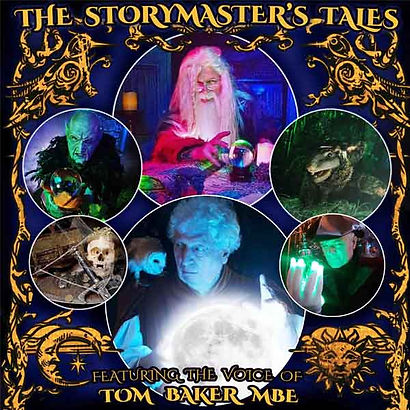
Oliver McNeil, it is an honor to be interviewing the creator of The Storymaster's Tales.
What first drew you to the gamebook format?
Oh, well, I go right back to 1983, when I was a fresh-faced, innocent eleven-year-old. I remember saving my pocket money and being drawn to the utterly horrific, nightmare-inducing cover by Ian McCaig. My older brothers were both into Dungeons & Dragons, but since they were older, they didn’t want to play with an annoying little squirt like me. So, I bought it to play on my own and was hooked.
Over time, I bought loads more, but if my memory serves me correctly, I stopped around the time of Island of the Lizard King. I played Sorcery!, which I loved, and then moved on to Lone Wolf. At the same time, although it wasn’t a gamebook, Talisman was closely connected through the artwork, and I spent many wet summer days playing it with my brother, who, by then, had finally allowed me to play D&D with them.
A small but weird fact: the teenager who used to be the Dungeon Master of our little group went on to become the man who created the phrase “Leopards ate our face, party.” Again, it has nothing to do with your question, but I thought it was an interesting bit of trivia.
How did The Storymaster's Tales series come about?
As I mentioned before, I loved gamebooks, Talisman, and role-playing games. I loved them so much that I wanted to live in those worlds, so I moved on to live-action role-playing games and then theatre.
Part of bringing fantasy to life involved making props and costumes and creating scenery. Coming back to solo gamebooks for a moment, I actually got into theatre design college because of all the huge-scale paintings of Fighting Fantasy artwork that I had created on my bedroom walls.
Fast-forward twenty years, and I had my own interactive fantasy theatre, where I still perform the stories today. This year, I performed a sell-out show at the UK Games Expo, as well as appearing at various gaming events and the Fantasy Forest, the biggest Ren Faire in the UK.
I knew I had created something fun for people to get involved with, but I couldn’t perform everywhere. So, I designed The Storymaster’s Tales to bring immersive stories and adventures into people’s homes. I brought many elements from the live shows into each book, such as making them easy to play and understand, keeping them family-friendly, and using soundscapes and narration for every quest. Being family-friendly is VERY different from being a game only for children. Fighting Fantasy, after all, was marketed for ages eight and upwards.
The other thing that was very important to me was making it possible to play both solo and as part of a group.
I launched the series eight years ago, and I’m still writing more. In fact, I also run a live-action role-playing version of my games on a 700-acre manor estate here in Pembrokeshire, where I now live. What more could you want?
How has your creative process evolved while writing The Storymaster's Tales series?
That’s a good question, as I think my creative process is possibly rather unique.
For the Classic books (see below for more about the Quests), I would first choose a location that I wanted to explore. I would then create fifty locations that I wanted to include, each of which could contain five or more possible narratives. My artist would illustrate them, and I would then write the full descriptions and player choices, using what my artist, Nick Vuimin, had envisioned. After that, I would send the narration to my voice-over professional, Mel Shiner.
Only then would I weave all the plots, conclusions, and quests together. I would write as though I were both playing the game and acting as the Dungeon Master.
Moving on to my new Quest series, the working method is quite different and is much more like the way I write my live-action role-playing games and theatre shows. I now write a twenty-act adventure, followed by the narration and choices, the results of those choices, and finally the soundscapes and voice-over. You will understand why when you read my answer to the next question.
What is next for The Storymaster's Tales?
The Storymaster’s Tales: Quests is something that people have been asking me to create for many years. The Classic series allows anyone to role-play through Guided Play, while the Quests allow players to create their own characters and attempt anything they wish within the game.
I have eight Quests launching this year, and each will include a complete set of rules, Guided Play, and a full RPG mode. They will also include narrated and non-narrated soundscapes, creating a more theatrical parlour experience. It brings the books even closer to the live experience.
What advice would you give to aspiring gamebook authors?
My advice would be to just start doing it, but try to find a different angle or some way of making yourself stand out from others.
Oh yes, and don’t use AI art. It won’t look good, and it may affect your sales. Find an artist and work with them. They might help you visualise your book in ways you could never have imagined. I know that working with my artist has certainly made my books much better.
Where can readers and fellow writers of gamebooks follow you and your work?
You can find all my books on Amazon by searching for The Storymaster’s Tales or Tome of Terror.
Signed copies are also available from
Facebook: https://www.facebook.com/groups/339654010167488
Instagram: https://www.instagram.com/storymasters_tales/
Thank you again for this opportunity to ask you questions about yourself and your book series, and for sharing your advice for new authors of gamebooks. I wish you the best with The Storymaster's Tales.
- Anthony Lampe

Gamebook Author Spotlight #13
Mark Lain

Mark Lain, it is an honor to be interviewing the creator of Destiny's Role.
What first drew you to the gamebook format?
This is a story I tell quite often. My parents speculatively bought me The Warlock Of Firetop Mountain as a random present for Christmas in 1983 to see how I might react to it. I was instantly hooked as I’d never experienced anything quite like it. I liked reading anyway, but this was on another level. We were in WH Smith’s a few weeks later to get another one. Then it snowballed, and I was eventually getting them as soon as they came out.
How did the Destiny’s Role series come about?
DR was as much a result of my own hubris as anything else. I started by writing the MALthus Dire Blog where I reviewed FF books. That led to me deciding to put my money where my mouth was, and I wrote a handful of short fan adventures that were accepted by the old Jamie Fry-run FF website. From there, I started formulating ways to modify the systems used in those, at which point DR was born. I wasn’t especially satisfied with the direction the new Scholastic FF books were taking, so I decided to write my own series to better reflect what I wanted from gamebooks and what it was that originally appealed to me about them. DR is deliberately old school, and I make no apologies for that.
How has your creative process evolved while writing the Destiny’s Role series?
I certainly worry less now about how people will receive them. The first two or three were written with the player/reader very much in mind, and I self-consciously tried to make them crowd-pleasing. From RED MONSOON onwards, I feel I’ve written more for me and have had more freedom to create gamebooks that are to my taste, as a result of the reception the first three received. I still do the same levels of historical research (true history is a passion, and I think it really adds depth to a gamebook) and still try to draw in popular culture influences, but I have also increased the graphic nature of the later books and have been less afraid to push the envelope on content, what is illustrated, etc. I also improvise more nowadays, inasmuch as I’d say my more recent books are probably about 70% planned/designed and 30% on-the-spot additions as I’m writing. In the earlier books, there was a much stricter design, and planning went into them. I have also tried to move more away from single true paths and opened out the replayability with more ways through to success. I think they are getting easier now, too, as I focus more on events than designing a rock-hard game, but that seems common with gamebook authors generally.
What is next for Destiny’s Role?
I have lots of ideas, as I have a very limited attention span. The main series (the numbered books) will continue to grow the world of Silvastria. I have ideas for a prologue/back story book where Silvastria is first discovered (a sort of conquistador epic, if you like), and I want to do a high fantasy gamebook with traditional elves/dwarves/dragons in the Tolkien vein. I have ideas for a vampire gamebook, too. At some point, I will write the 3rd and 4th parts of the DIMENSIONS sci-fi companion series, but they are on the back burner for now, as they don’t sell anything like as well as the fantasy books.
I also have lots of plans for more “experiments” books, and these interest me a lot as I really want to try and innovate and push what can be done with gamebooks – the next one will be out this year (I hope) as I’ve been teasing it since FFF5. I also want to do a gamebook where the reader literally does what the book tells them to do (but I need to be careful not to indirectly get people hurt or arrested lol).
I have a list of probably 20+ unwritten titles and notes for about half a dozen of them in various levels of incompleteness. I have no intention to stop as long as at least one person reads them.
What advice would you give to aspiring gamebook authors?
Believe in your idea. If you think it’s good, it probably is, as gamebook players know what other gamebook players want to read. And also remember that it is YOUR book, so you need to write what you want to write. Basically, just do it. At the very worst, you’ll get lots of constructive feedback to make the next one better. And if you only ever write one, it’s still one more book than most other people you know will ever write, so you can be proud just of the fact that you can hold your work in your hands.
Where can readers and fellow writers of gamebooks follow you and your work?
I mostly promote through the Facebook groups and my Kickstarter page. I do have a Twitter (or whatever it’s called this week) account, but I rarely use it as it isn’t the right target audience. The scene is very active on Facebook, so that seems to be the best outlet for promotion.
Facebook: https://www.facebook.com/mark.lain.5
Destiny's Role gamebooks are available on all Amazon markets.
Thank you again for this opportunity to ask you questions about yourself and your book series, and for sharing your advice for new authors of gamebooks. I wish you the best with Destiny's Role.
- Anthony Lampe
Gamebook Author Spotlight #12
Martin Noutch

Martin Noutch, it is an honor to be interviewing the author of the Steam Highwayman gamebook series.
What first inspired you to write interactive fiction?
I had a great teacher in primary school. Mr Lowery taught me for two years and while I was in Year 5, he introduced our class to choose-your-own-adventure books. He had come across them, seen the potential and then reverse-engineered them to turn them into a teaching opportunity. Our whole class churned them out, working in pairs or alone. He taught us to plan them with choice-maps and tables to keep track of the pages. A friend of mine wrote a short series in which you were pets escaping or having adventures - a gerbil, a good dog, a naughty kitten. A pair of boys in Year 6 called Matt and Joseph wrote a series called 'World Adventure', in which you travelled across continents and ran into all sorts of gory, tv-inspired problems. My best friend Jono and I teamed up to create The Emerald of Wolla Wolla - which I still have. We had Fabled Lands I and II in the class library and about twenty of the orange-edition choose-your-own-adventure books scattered across the school. So it wasn't so much 'what' as 'who'. Cheers, Dave Lowery.
What led you to create the Steam Highwayman series?
I've been a writer since I was young and struggled to finish a couple of novels in my twenties. I wanted to do something more structured and with a clearer sense of success, so I figured I'd create a series like Fabled Lands but set in a location I knew - I had just moved to London from Marlow, where Smog & Ambuscade is set - and in a world of my own - I had been enjoying discovering The Difference Engine and Pavane. The combination was electric - I mean, highly-pressurised! I'd also been riding a small Yamaha for a few years and liked the idea of an open-world gamebook which you would explore on two wheels.
What is next for you or your Steam Highwayman series?
Steam Highwayman: Princes of the West will be released this summer. It's my biggest and best gamebook yet - more than 2100 passages of choice and consequence, set in West Devon and Cornwall, fighting for Cornish independence, encountering folklore, robbing the rich, dodging Imperial spymasters, finding buried treasure, eating scones, taming birds, customising your velosteam, meeting rhinos, delivering hot sauce, getting soaked in bad weather, catching colds, keeping your face... I've just completed an Adventurer's log to accompany it which lists 200 achievements. Then there are two more books planned: Dark Vales and Dark Hearts, set in Wales, and The Great North Road.
Can you explain what led you to create the Write Your Own Adventure literacy program for schools?
I trained as a teacher in 2008 and as soon as I had my own class, I went back to my roots and began to use choice-based fiction to enthuse and engage my classes. After a while, I honed my practice into a series of really slick lessons, even creating a 'Book in 30 minutes' style session for interviews. It worked - I got hired every time I pulled this one out. I'm not teaching any longer, but I still share the resources with other teachers and occasionally run a training session...
What advice would you give to aspiring gamebook authors?
Be original! Write about the things you enjoy and care about! Read other gamebooks and see how their writers use mechanics. Enjoy board games and tabletop roleplaying to collect ideas to freshen our genre. Keep going! Publish - online or in print - as soon as you can, gather feedback and improve. Then, when you know enough to write something you're proud of and have a small number of people who want to read your next thing, take it seriously, hire a human illustrator and create something that will inspire generations to come.
Where can readers and fellow writers of gamebooks follow you and your work?
I write about my writing process on my website, where you can also buy books and extras direct. You can also order through bricks-and-mortar and online stores.
Website: https://martinbarnabusnoutch.com/
Goodreads: https://www.goodreads.com/author/show/18195908.Martin_Barnabus_Noutch
Facebook: https://www.facebook.com/steamhighwayman
Instagram: steamhighwayman
Kickstarter: https://www.kickstarter.com/profile/steam-highwayman
Thank you again for this opportunity to ask you questions about yourself and your series, and for sharing your thoughts about the genre and advice for new authors of gamebooks. I wish you the best with your Steam Highwayman series.
- Anthony Lampe


Gamebook Author Spotlight #11
Lee McGeorge

Lee McGeorge, it is an honor to be interviewing the creator of Audio Adventures.
What first inspired you to create Audio Adventures?
It was a complete accident. I lost my job at the start of Covid and found myself unemployed and in lockdown. I was an electronic hobbyist, but not an expert. I decided to download all the course materials for an electronics degree and self-educate, but because I knew there would be no diploma or certificate at the end, I set out from the very outset to develop some kind of product I could use in lieu of a degree certificate. This became the Audio Adventures electronic gaming system, which we jokingly call the “Gameboy for the Blind”. It looks like a Gameboy, with its handheld form factor and physical cartridges, but plays like an audio version of Choose-Your-Own-Adventure books, mixed with puzzles, reaction games and various other sound-based challenges.
What is it that most excites you about Audio Adventures?
The people who use it. I didn’t set out to make something for blind players, but from the very first prototype we realised it would be fantastic for people with low-vision. The first product tester we had was a young man who had gone blind following a stroke, so not only had he lost his vision, he’d lost his fine motor skills and cognition. Things like pairing bluetooth headphones had become too difficult for him. I realised if I built a system he could use, then just about anybody could use it. As a result we’ve developed the ultimate gaming system for people who can’t use touchscreens or play regular video games. I get messages not only from blind players, but about people using it after strokes, elder people with dementia, children with severe autism, etc. This was wildly unexpected.
What is next for Audio Adventures?
More games and a stronger business footing. What makes us unique is also our challenge. The people who get the most benefit are also the people who are hardest to reach through traditional advertising. When it comes to game design, originally I looked for 3rd party game developers and recruited some really great people with backgrounds mobile gaming and Xbox, etc. It turned out these people had the wrong skills. What I needed were people who could produce audio dramas, not code games.
What advice would you give to aspiring gamebook authors?
Start small, get it done and get it published online for free. Make small things and get it online as a way to begin building your audience and learn the skills whilst you work on a larger and more worthwhile commercial project.
I launched Audio Adventures through Kickstarter and the most important thing I learned is “You can’t crowd fund without a crowd.” I had to learn a lot of new skills for the pre-marketing to build a fan base. When I went live on Kickstarter, we hit the funding target in the first hour, but this is only because I spent months building a database of thousands of potential buyers and kept them excited with weekly video content.
Where can listeners, readers and fellow writers of gamebooks follow you and Audio Adventures?
We sell Audio Adventures exclusively through our website https://www.trumantoys.com/
We also post update videos on Facebook every week, taking people through the many ups and downs of building and releasing a product and building a business, whilst also showing the game development. (The videos are duplicated on youtube, but the real-time conversations happen on Facebook).
You can join our community and see the videos here: https://www.facebook.com/profile.php?id=61557445460965
Thank you again for this opportunity to ask you questions about yourself and Audio Adventures, and for sharing your advice for new authors of gamebooks. I wish you the best with Audio Adventures.
- Anthony Lampe


Gamebook Author Spotlight #10
Rose Estes

Rose Estes, it is an honor to be interviewing the creator of the legendary Endless Quest gamebook series.
What inspired you to create the Endless Quest series?
I started with TSR in March of 1977. I was their 13th employee. One of my original tasks was trying to explain the game to parents, teachers and the clergy. It was an uphill battle. No one wanted to listen, they just wanted to rant. And the game was hard to explain to someone accustomed to playing chutes and ladders or, at best, monopoly. In 1982 I was bored and unhappy. By chance, a traveling tent circus came to Lake Geneva and I found that I knew a family of performers. They invited me to accompany the circus so I took a leave of absence from TSR and went off with the circus. We were in Decorah, Iowa and I was in town doing my laundry. There was a shelf of books and you could read them while waiting and/or buy them for .25. There was an Edward Packard Choose Your Own Adventure on the shelf and before I was five pages in I realized that was the way to explain the game. I called a friend and they picked me up that very day. I didn't even go home, I went straight to work and put the book on my boss's desk. I said, "this is how we explain the game. We have to write a book like this."
I was expecting that he would grasp the idea immediately and be as excited as I was. I expected he would give it to one of the guys who wrote the modules and that would be that. Instead, he just said, "no."
But, if I believe in something, I can be annoyingly persistent. I kept at him for months. He finally became so exasperated with me, he said, "If you think this is such a hot idea, you go home and write it yourself." Immortal words, I'll never forget them. It so infuriated me that I went home and did just that, wrote it myself, long hand on a yellow legal pad. I had it typed up and it sat on the corner of his desk, untouched, for three months where I could see it daily. I'm still in the dark as to how it found its way to Random House but they immediately ordered three more. My boss just dropped it on my desk January 3 of 1982 and said "write three more, I need them by April 1." And I did. That's how the EQ's came to be. I don't think anyone was prepared for how huge an instant, profitable success they became, and no one more than me! So that's the story of the birth of the EQ's.
How has your creative process evolved from the Endless Quest series to how you write interactive books today?
I wrote four interactive books for Random House back in the '80's but haven't written any others until I wrote my new book "Different: Into the Shadows," For Savage Realms/Gamebooks/Press. I wasn't interested in doing so before this. I was tired of the format and in the last books, no matter what my protagonists chose to do, I killed them! I had to change it of course before I turned the manuscripts in, but that was my mindset.
Over the years, I've become very cognizant of the fact that just as the books point out in their abbreviated form, every single decision we make in life determines the course of our future. Even the mistakes. Especially the mistakes. Some of them turn out to be happy mistakes, like my taking a minimum wage temporary job at TSR, while looking for a real job.
What can you tell us about your latest interactive book series you just launched?
I found that in writing "Different" I was unable to write for a nine year old audience. My storytelling required more character and plot development. I tried to emulate the early books and write simply and to the point. But apparently, I can no longer do that and satisfy my own needs. I've thought about each of these four characters in some depth over the past two years and they occupy a very real place in my brain and talk to me, give me instant feedback on what I'm having them say and do. They have demanded the space to tell their stories.
I've also realized that my earliest readers are now in their '50's and I didn't think their grown up minds would be satisfied with the bare bones approach of the earlier books. So, the plot lines, character development and vocabulary are at a higher level. I mean, "Different" isn't John Updike, but it is, well, different. I'm actually quite proud of it. And I really, really like the characters. I look forward to seeing them grow over the next three books.
What advice would you give to aspiring gamebook authors trying to build immersive, replayable adventures?
There's soooooo much out there competing for the same readership. I think the absolute best advice I can offer is to do your very, very best at a gripping storyline with the most well developed, interesting characters you can imagine. After all, at it's most basic every single genre from movies to video games to books, it's really all about storytelling. Take way the flash/bash/crash/mash/lights/bells/whistles and gongs, it all comes down to storytelling. If your story isn't engaging and your characters dimensional, it won't go far or last long.
Personally, I like niches. Square chinned, ruggedly handsome heroes and damsels waiting to be rescued are all fine in their place, but I'm far more interested in the less easy to quantify characters usually relegated to the fringes. Take the wildly successful "Dungeon Crawler Carl," series. Carl is good, I like him, he's smart and I like his thinking, but it's Princess Donut who keeps me turning the pages. She's pretty straightforward, not very complex, predictable even, but I really enjoy her character. I'm frankly amazed and stricken with awe by the hundreds and hundreds of complex situations Dinniman plunges poor Carla nd Princess Donut into and out of. Wow! A man I met once told me that he designed safe rooms for adventure sites (not sure that's the right term) and that he used some of my early scenarios in his work. Frankly, that astounded me. He could mine Dinniman's books for years before he ran out of ideas.
So, if I have a message I guess it's just this, dare to be different, go outside of prescribed plot lines. But most of all, be interesting. If you're not interesting, you got nothing.
Where can readers and fellow writers of interactive adventures follow you and your work? Share any that apply.
You can find me at:
Facebook: The Hauser Gallery
I own the Hauser Gallery Dragon Emporium in Seal Rock on the central Oregon coast. I am at the gallery every Saturday 11-5 and am delighted to meet and speak with those who have read my books.
I will also be at Gary-Con March 19-22. I'm on several panels and will be selling books, prints and figures.
Instagram: dragon_emporium
Kickstarter: https://www.kickstarter.com/projects/rose-estes/the-quest-continues
An amazingly talented friend suggested that he could create the first four characters of Different as miniatures. Being unfamiliar with the field he didn't realize that miniatures were actually miniature size. So he sculpted all four at 6"! They're wonderful! The book has gone to press and will be available the last week of February. The kickstarter is actually to raise the funds to have the figures made in quantity.
X: @realroseestes
@HGDragonEmp
Reddit: r/RoseEstes
Thank you again for this opportunity to ask you questions about yourself and your series, and for sharing your thoughts about the genre and advice for new authors of gamebooks. I wish you the best with your latest series.
- Anthony Lampe
Gamebook Author Spotlight #9
Joseph Daniels

Joseph Daniels, it is an honor to be interviewing the creator of the Magma Gamebooks series.
What first drew you to the gamebook format? Can you tell me a little about some of the first interactive books you had written?
I had actually been trying to land a publishing deal for several years for a few books I had written, which included a young adult fantasy series called the Hermacles Divide. After countless rejections, I decided to take some time out and visited my old house where I found a number of fighting fantasy books in the attic that I had completely forgotten about. After re-introducing myself to these, I thought it might be fun to have a go at writing a game book set within the same universe as the Hermacles Divide. Originally it was just for my own personal enjoyment, but as I progressed, I realised that I had a knack for writing this type of book and decided to write one with the intention of self publishing it. Of course because no-one had heard of the Hermacles Divide at the time, I thought I should do something unrelated to my previous books. The idea of writing something to do with Time Travel appealed to me very much, because I often disliked dying in other books and being forced to start again or cheat. I thought it would be cool if I could create a game mechanic that would give you the chance to reverse time and thus reverse your actions, so that you could learn from your mistakes and avoid the unfairness of instadeath or the dice conspiring against you. That book would of course go on to be The Ghosts of Craven Manor which has become my most popular book to date and has spawned one sequel and six episode spin off series. However, I did not forget the personal project that led me to write it, as that went on to become the Shadowborn Trials, which was released soon after the Ghosts of Craven of Manor.


What inspired you to create the Magma Gamebooks series?
Originally it wasn't a series. The idea of branding them first came to me and my business partner in Jan 2025. At that time I had already written 10 books and we both agreed it was time to rein them all in under one banner to make them more recognisable. This would also coincide with a complete redesign of all the covers, something we had been intending on doing for a while. Since it had been noted on more than one occasion in reviews that people loved the advanced game mechanics, and that this was a unique selling point for the books, as well as the fact that these books were bigger than most in story length and replayability, branding the series Massive. Advanced. Game. Mechanic. Adventures (MAGMA) seemed to make the most sense.

What is one of your favorite gamebooks you have ever written and why?
My favourite Game Book I have ever written is Grim Dickensian. This is for two reasons. The first is because I love victorian literature, especially Sherlock Holmes and Dracula, and felt priviledged to be able to use these characters among many others within a single story. And the second is because I believe this book took both my writing and game mechanics to a new level that I have yet to surpass. The most amazing thing is that I wrote it during Covid, with a faulty laptop that couldn't type properly and kept on crashing and losing work. That added with the fact that I felt intimidated by the project and thought I had bitten off more than I could chew, yet somehow still managed to create something others would later call a "Masterpiece", made the finished product more special.

How has your creative process evolved through writing this series?
When I started, I had too many game mechanic ideas and no discipline to hone them in. I wasn't considering how many rules a typical player was capable of remembering or enforcing at the right time. Luckily most of my readers were fairly well versed in game books and it didn't seem to bother them, but I could tell there were some that were avoiding the books based on the compexity. Because of this, I started to create more systems to keep things in check. This worked to some degree, but I noticed a lot of the books were starting to become mechanical and lose that spontaneous element of choice. It was then that I decided the only way forward was to create systems that although complex in their creation, were more accesible to the player and did not dwarf the element of choice. This is still a work in progress, that gets better with each book, but I believe I will eventually get the right balance. I've also discovered a number of short cuts which can help me get a book up and running quicker than usual.

What advice would you give to aspiring gamebook authors?
Firstly, if you're thinking of doing it as a career, but are already good at something else with more prospects, do that instead. Writing Game Books is hard enough, but getting your work out there can be close to impossible, even if you have a talent for writing. However, if you still feel like you have what it takes to write a game book, then the best piece of advice I can give is to explore everything else that is out there first, before thinking of a way to make your work unique. Too many people either copy what has gone before, or write without an awareness of what has already been done, and as a result, flood the market with a lot of the same books, some of which are very basic both in the storytelling and mechanics and shouldn't even be called game books. Find your own style and embrace it. Be creative and make the game mechanics relevant and innovative. Do not use AI for writing or art work, because cheating the creative process, makes the whole thing meaningless and will result in a poor, or at best, mediocre product. If you can't follow this advice, then all you'll end up doing is adding to the slush pile that prevents other talented Gamebook authors from being noticed. Don't be that person.
What’s next for you and Magma Gamebooks? Any upcoming projects or directions you’re excited about?
Grim Dickensian Tales is the project I am currently working on. This is a spinoff from Grim Dickensian that allows you to play as two new characters; Irene Adler and Quincey Morris. It has been a lot fun to return to this world, but also extremely difficult because I didn't realise I had already covered a lot with the original entry. I also have plans to expand King's Judgement into an open world series, and have a standalone fantasy idea that I hope may see the light of day. As well as this, I have been freelancing for a couple of other companies; one of which is Savage Realms, who will be publishing my debut for them; The Sacrifice of Sandrigal, later this year.

Where can readers and fellow writers of interactive adventures follow you and your work?
Facebook: https://www.facebook.com/magmagamebooks/
Thank you again for this opportunity to ask you questions about yourself and your series, and for sharing your thoughts about the genre and advice for new authors of gamebooks. I wish you the best with continuing the Magma Gamebooks series and all your future books.
- Anthony Lampe


Gamebook Author Spotlight #8
Jonathon Kelly
Gamebook Author Spotlight welcomes Jonathon Kelly:
Jonathon Kelly, welcome to the Gamebook Author Spotlight. Thank you for taking the time to be a part of this interview series.
What first drew you to interactive storytelling? Were there any favorite books that inspired you?
As a child, my first memory of gamebooks was getting The Forest Of Doom one Christmas, I may have had simpler interactive books before that, I still have some from my childhood, but it was the Fighting Fantasy series that I fell in love with and collected fully. Grailquest was another favourite as I loved the sense of humour in the books. The mixture of art and choices was just perfect for me at that age, it was a thrill to be in at the beginning of something that became so popular, in the same way owning a ZX80 computer was another adventure in the 80's! My dad was a book dealer, so I already had a love of reading, but gamebooks and comics supercharged that.
What is your approach to writing the choices and endings in your books?
I tend to think of the plot line first, the central idea that gets me excited enough to write the book. For The Flesh Thieves Of Karnaf Tath (TFTOKT), it was the idea that the seven deadly sins were represented by animals in the beginning. This sparked an idea I could incorporate I had earlier for a short story, about a man who woke up every morning and had a cube of flesh removed from his body and had no idea how or why this was happening. That linked in with the idea of a utopia, maintained by a sacrifice of a child every 10 years. But what if one child - YOU, survived, mutilated and questioning everything in a land where everyone is happy and peaceful. It all swirled in my head, and at the point of starting writing, I may have had one or two endings in mind, but I knew more will come in the writing of the book. To me gamebooks should be about moral choices, not just what direction you explore a dungeon! Playing with the idea that every sin begins with a thought seemed perfect to me for a dynamic gamebook. I like to have definite good and bad endings, then mix in a few so close, but so far ones, not because you missed a certain jewel, but because your moral choice fell short at a critical time.
Is there a particular book or storyline you’re especially proud of?
I think my longest book - The Green Apocalypse is the storyline I liked the most. The starting idea was what would happen if the current paint throwing, motorway blocking eco activists got serious? What happens when they start killing people to make them listen. But that was not enough, so that idea stayed and I realised that it becomes a Sci-Fi book when I asked the question, what happens when the PLANET gets serious, and decides to kill off the human race. Now it was this huge, epic idea that could incorporate unreal situations, creatures and by setting it just 50 years in future, I could use satire to skewer current situations and things to do with the environment. I knew I had the right balance when I pictured eco terrorists chain-sawing off the leg of the most famous footballer on the planet during a World Cup game! It was both disturbing but blackly humorous, as how ridiculously huge will the WC be in 50 years time and how angry will people be if FIFA keep ignoring global warming and only care about money! I'm not saying it would happen, nor that I want it to, lol, but it COULD!! I wanted to say something pertinent in the book, but in an entertaining way, I certainly enjoyed writing it.
Are there any upcoming projects or themes you’re excited to explore?
I have completed Dread Hollow for Savage Realms Press. It was successfully crowdfunded and Lynn Schermer is currently getting the artwork organised, so I’m looking forward to that being published. The book is set in America and looks at the history of folkloric creatures and monsters that the colonists brought with them. You play as an archeologist who keeps hopping through time, trying to solve the mystery of what is happening to you and encountering creatures like the Snarly Yow and Wendigo. As usual with me, there is a more serious subtext involved, but I don't want to spoil that for future readers.
As to my next gamebook, it will be called SEED? and is my riff on a Wicker Man type folk horror. Stranded, alone and helpless you seek help from a local village. Every person you meet says the same thing to you upon hearing your entreaties for help, they simply ask "Seed?" Working out what they want and why they all think alike is just the start of a dark journey into a community where nothing is what it seems, and no one acts in an expected way. I will crowdfund that at the start of 2026.
What advice would you give to aspiring interactive authors?
Ask yourself this: Do you really have the talent to make something exciting and different? It is a crowded market and certainly not easy to sell books in. Writing a good gamebook is hard work, so do your research. A lot of folk tell me they don't make any money self-publishing, which to me is kind of pointless. Crowdfunding should definitely help avoid that scenario when done correctly. The other thing is, don't use AI. I would buy a book that uses a cover your 7 year old nephew drew, whereas I would never give my money to someone who devalues artists enough to use AI. The whole reason we love gamebooks is because of artists like Blanche, McCaig, Barter etc. The hand-drawn art is integral to the experience. Also, even worse, if you think you can't write a book without AI, don't write it. Use the time to learn to play guitar or some other, actual skill. But if you want to write the proper way, it is very simple. You get better with practice.
Where can readers and fellow writers of interactive adventures follow you and your work?
I am old school, I hate technology and would rather send out a posted mailing list lol! However, I know I have to use it, so at the moment, there are three ways to follow or support me...
Facebook: The Flesh Thieves of Karnaf Tath - A new Gamebook! | Facebook
Other: DriveThruRPG - JK Gamebooks
I have paper copies of both The Green Apocalypse and TFTOKT available direct from me on Ebay here...
The Green Apocalypse And Flesh Thieves Bundle, 2 X Gamebooks, Discount Deal | eBay UK
Thank you again for this opportunity to ask you questions about yourself and your books, and for sharing your advice for new authors of interactive adventures. I wish you the best with all your future gamebooks.
- Anthony Lampe


Gamebook Author Spotlight #7
Edward Packard
Gamebook Author Spotlight welcomes Edward Packard:
Edward Packard, it is a true honor to be interviewing the pioneer of the "Choose Your Own Adventure" format.
Can you share a brief history of your bedtime stories with your children and how it led you to invent interactive storytelling?
Sorry, it's too time-consuming to go over this. Should be easily findable by web search (though I haven't checked it out) -- I've recounted this many times publicly.
Additional Information:
New York Times, August 25, 1981 Article:
https://www.nytimes.com/1981/08/25/books/choose-your-own-adventure-and-make-your-own-ending.html
What is your favorite interactive story you have ever written, and why? You can name a few if there is more than one that comes to mind.
It may be The Forbidden Castle. I'm writing a “commemorative” version of my favorite
part of it right now. Check with me in six months if interested. Tentative title: "Lost in the Kingdom of Rufus the Mad."
As your writing career took off and evolved from the Adventures of You series to Choose Your Own Adventure, U-Ventures, and beyond, how has your storytelling evolved as well?
It's branched into other areas, for instance, the Space Hawks series; Escape series (many branches leading to only one ending); and Earth Inspector Series (you're an advanced alien inspecting Earth). None of these took off.
Your creation of the interactive narrative has inspired dozens of series over the decades. Do you have any advice for newer authors just beginning to write their own interactive adventure books?
No, because I haven't kept up with developments. I'm culturally out of it.
Where can readers and fellow writers of interactive adventures follow you and your work?
There's a lot on my website: edwardpackard.com, all free to read.
Additional Information:
On August 5, 2025, The Cave of Time, the first book of the original Choose Your Own Adventure series from 1979, was rereleased by Chooseco. Then on November 4, 2025, The Mystery of Chimney Rock was re-released. Four more of his classic books will be released: Spring 2026: Your Code Name is Jonah and Who Killed Harlowe Thrombey?; Fall 2026: Inside UFO 54-40 and The Underground Kingdom.
Thank you again for this opportunity to ask you questions about yourself and your writing process, and for sharing your thoughts on the genre and offering advice to new authors of interactive adventures. I wish you the best with the re-released books in the Choose Your Own Adventure Series, and your future endeavors.
- Anthony Lampe


Gamebook Author Spotlight #6
TroyAnthony Schermer

Gamebook Author Spotlight welcomes TroyAnthony Schermer:

TroyAnthony Schermer, it is an honor to be interviewing the creator of the Savage Realms gamebook series.
What first drew you to the gamebook format?
Perhaps it is an overused cliche', but who doesn't want to be the "hero of their own story"? It was this very notion that immediately drew me to the Choose Your Own Adventures series, the Endless Quest books, and, of course, Fighting Fantasy.
How did Savage Realms come to life?
April 11th is a date of great significance to me. It was on this day, in 2019, that I, TroyAnthony Schermer, officially became a gamebook author with the release of Labyrinth: The Lich Lord’s Lair! But this is a journey ― and I’m quite certain all of my fellow gamebook authors will also attest to this ― that began much, much earlier in our lives. For me, this journey actually began during my childhood.
There was a Book Fair going on in the library at my school, and after wolfing down my lunch, I headed straight there to browse the many titles that were available for purchase. Most of
the books there were of no interest to me whatsoever. It was while looking at their selection of Choose Your Own Adventure books that the cover of one book, in particular, immediately
grabbed my attention. It was not a Choose Your Own Adventure, but had been haphazardly placed on the same display alongside of them. It was similar to CYOAs in that it allowed you to decide how the story unfolded, but this… this was something truly unique, indeed, and having elements I had never before seen in any book ― more specifically, character stats and dice mechanics! I was intrigued and had to have it! There was just one problem ― I didn’t have any money to get it!
I went home that day and asked my mom if I could buy this book, but I already knew what the answer was going to be because my family was poor. Undaunted and determined, I had formulated a plan... It was because we were a low-income family that my brothers and I qualified for the reduced lunch program, so, instead of paying full price like the other kids for a hot lunch, we only had to pay half. My mom would give us our lunch money every morning before we got on the bus. It took nearly a week and I had to go without lunch everyday, but by the end of the week, I had scraped together enough money.
On the last day of the Book Fair, I strode proudly into that library and purchased that book ― the U.S. edition of The Warlock of Firetop Mountain by Steve Jackson and Sir Ian Livingstone! This is one of the most vivid memories that I have of that period of my childhood, and the profound effect it had on me has literally remained with me to this day.
So why the trip down Memory Lane? Because it is that nostalgia that ultimately led and inspired me to write Labyrinth: The Lich Lord’s Lair, the first in a trilogy that would eventually become what you know as Balance of Fate: The Legorian Kings Saga, the first book in the all-new Savage Realms Gamebooks series!
Savage Realms blends deep RPG mechanics with a branching narrative. How do you balance gameplay and story during development?
Being a storyteller first and foremost, it was very important to me when relaunching Savage Realms Gamebooks as its own imprint that the game mechanics and combat system be simple and not detract from the epic story being told in Balance of Fate: The Legorian Kings Saga. To accomplish this, I recruited Michael Lee and Peter Agapov, and their insights, coupled with their extensive knowledge of gaming and gamebooks, is what gave birth to the game mechanics and combat system you see embodied in the main series of Savage Realms Gamebooks.
What’s one design decision in Savage Realms that you’re especially proud of—and why? (A favorite mechanic, twist, or innovation?)
The Savage Realms Gamebooks combat system. While many gamebooks feature a turn-based combat system, by simply having two different colored, six-sided dice (one color for yourself and the other color designated for your opponents), you can roll both dice simultaneously, thereby eliminating turn-based combat and maintaining a more steady flow with regards to combat encounters. The numbers rolled are then added to your and your enemies' Combat Skill Scores and whoever has the highest total between you and your opponent is the party that “hits.” Another 1d6 is then rolled to see how much damage is inflicted. A tie, where both of your totals are the same, means that neither of you hit.
How has the Savage Realms series evolved since its creation?
Since its inception, the series has evolved to include other author storytellers, many of which have their own gamebooks series or have written books for other notable interactive fiction IPs. Mark Lain is the mastermind behind the Destiny's Role series. The prolific James A. Hirons has written and produced several titles for his Literally Immersive Gamebooks series. David Lowrie has his Black Dog Gamebooks series. Harley Truslove has written titles for Obvious Mimic and Holmgard Press. We also have Paul Partington (GNAT, Dragon Warriors), Joseph Daniels (the MAGMA series), Jonathon Kelly, and Stuart Lloyd.
What advice would you give to aspiring gamebook authors trying to build immersive, replayable adventures?
In the immortal words of Nike, just do it! Write... write... and keep on writing. This is a journey, just like the adventure you are writing for your future readers. Yes, there will be moments of discouragement and writer's block on the way, but be steadfast. We, the gamebook and interactive fiction community, want to immerse ourselves in your story.
What’s next for you and Savage Realms? Are there any upcoming projects or directions that you’re excited about?
In addition to the main series of Savage Realms Gamebooks, Savage Realms Press will also be releasing several stand-alone titles and new series with their own unique game mechanics and combat systems, the first ones being Quest for the Gorgon's Eye by Colin Oatway, Raiders of the Iridium Caves by James A. Hirons, and The Ratwife of Sleepy Eye by Loquacious McCarbre. An "anthology" of gamebook shorts, entitled Portals: Tome of Adventures, is also in development and each volume will feature authors who contributed to the Lindenbaum competition hosted by Stuart Lloyd. The Art of Savage Realms Gamebooks, Volume 3 is also in the works. Finally, I am also very excited to announce that the legendary Rose Estes (Endless Quest, Find Your Fate, and Greyhawk Adventures) has been working diligently on the first book of her stand-alone series, entitled Different, and is hoping to have it completed by year's end.
Where can readers and fellow writers of interactive adventures follow you and your work?
All Savage Realms Gamebooks titles are available for purchase on Amazon and all of its affiliate worldwide marketplaces.
Links for connection:
Webpage: savagerealmsgamebooks.com
Contact us at: savagerealmsgamebooks@gmail.com
Follow us on Twitter: @SGamebooks
Follow us on Instagram: http://www.instagram.com/gamebook_adventures/
Tiktok: https://www.tiktok.com/@savagerealmspress
And be sure to join our Facebook group to stay up-to-speed on
all things Savage Realms: Savage Realms Gamebooks
Thank you again for this opportunity to ask you questions about yourself and your series, and for sharing your thoughts about the genre and advice for new authors of interactive adventures. I wish you the best with continuing the Savage Realms series.
- Anthony Lampe


Gamebook Author Spotlight #5
Ben Devere

Gamebook Author Spotlight welcomes Ben Devere:
Ben Devere, it is a true honor to be interviewing the son of the legendary Joe Dever, creator of the Lone Wolf gamebook series.
What are your earliest memories of your father working on Lone Wolf?
I remember being taken to a party that his publisher Red Fox threw to celebrate some kind of milestone. X million copies sold or something like that. And they had a giant cake in the shape of the Lone Wolf logo, which is probably why I remember it!
How did his storytelling philosophy influence your own creative approach?
His style is very economical, almost sparse, which is the kind of writing that I also like. When reading, less is more with epic fantasy. It's a question of knowing what to leave to the reader's imagination and which blanks to fill. From reading his work, I think I managed to emulate his voice, but, like I say, it came quite naturally as it's my own preferred style anyway. As for storytelling, it was his notes we used to create the plot and flow charts etc., so we had a lot of help in that regard. But pacing and structure are really important, of course. I studied scriptwriting for film and television at university, so we had to do a lot of work on structure. The game books we have written generally fall over three acts, each with its own crescendo.
What do you think made Lone Wolf stand apart from other gamebooks of its time?
It was the first one to have a single continuous narrative and a player character that you can develop book-to-book. Accumulating skills, weapons, items, etc. Also, just the scale and ambition of the universe and how well-fleshed out it is. Gamebooks at the time seemed to be stand-alone adventures, except for notable examples like Steve Jackson's Sorcery. But this took it to a whole new level, where now there are literally dozens upon dozens of published works within the universe. It's really quite vast.
What has been your role in preserving and expanding the Lone Wolf universe?
I'm at the center of a web of creatives, from graphic designers and illustrators to marketers, writers, editors, and game designers. We have so many licensees across the world and so many different projects that someone needs to keep an eye on the thing as a whole. Trying to keep everything tonally consistent is tricky, but I try my best.
Do you see further opportunities for Lone Wolf in digital formats, apps, or even tabletop RPGs?
TableTop RPGs is something that we are already developing. We have a new strategy game called Vengeance of the Kai that was recently 300% funded on GameFound. We're also working on a line of skirmish games and miniatures. Digital stuff is something I've looked into, but for now, we're keeping it old school, focusing on physical products.
What advice would you give to creators developing branching narratives today?
Play with the form. It's a strange genre, unlike anything else. And it's still being innovated. Take risks, and just try to create something that you yourself would want to read. If it isn't exciting you, then why should it excite anyone else?
Where can readers and fellow writers of interactive adventures follow you and your work?
magnamund.com is our home base. Start with Book One: Flight from the Dark. But you can really start anywhere.
Thank you again for this opportunity to ask you questions about yourself, the legendary Lone Wolf series, and for sharing your advice for new authors of interactive adventures. I wish you the best with continuing the Lone Wolf series.
- Anthony Lampe


Gamebook Author Spotlight #4
L.M. Brincat

L.M. Brincat, welcome to the Gamebook Author Spotlight. Thank you for taking the time to be a part of this interview series.
What first drew you to interactive storytelling? Were there any gamebooks, authors, or genres that inspired Pick a Path?
I first read the original Choose Your Own Adventure books at age 8. They gave me the confidence as a young reader to read novels. I have also been inspired by watching my own kids play video games. Watching them play reminds me of the emotion and excitement of every decision, and I use those same ups and downs in my books.
What is your approach to writing the choices and endings in your books?
I love building the world in my imagination. The characters, places, and their stories then come alive, and I write them down to share with others. I write these stories because I love the idea of kids exploring new worlds — and discovering that every choice matters. They can try again, take a different path, and achieve a new outcome. That’s what resilience looks like in real life.
Is there a particular book or storyline you’re especially proud of?
My first book, Battle Royale, is one that fans of Fortnite love. I really enjoy hearing from fans about how excited they were when they found the path and got the Victory Halo. Into the Enderdragon's Lair is a great choice for Minecraft fans. In this book, readers need to crack a code to unlock a secret ending. I love giving reluctant readers a reward for reading more.


Are there any upcoming projects or themes you’re excited to explore?
I am currently writing a series about GlitchBLOX, where the top 100 Roblox players get stuck in GBLOX, a new gaming platform, with, you guessed it, glitches! In these books, you will need to find the Eternity Stones to uncover the truth of GBLOX and escape.
What advice would you give to aspiring interactive authors?
I believe books change people's lives. Many books have changed mine, and those authors likely have no idea of the impact they've had. The best advice I have been given is that to be an author, you need to write. Start, learn, keep going.

Where can readers and fellow writers of interactive adventures follow you and your work?
Website: www.lmbrincat.com
Amazon: https://mybook.to/pickapathseries
Facebook: https://www.facebook.com/lmbrincatauthor
Thank you again for this opportunity to ask you questions about yourself and your series, and for sharing your advice for new authors of interactive adventures. I wish you the best with continuing the Pick a Path series.
- Anthony Lampe
Gamebook Author Spotlight #3
P.J. Hoover
PJ Hoover, it is an honor to be interviewing the creator of the Pick Your Own Quest® interactive series.
Thank you so much for having me here! It is definitely an honor for me!
What first drew you to interactive storytelling? Were there any gamebooks, authors, or genres that inspired Pick Your Own Quest®?
When I was in 6th grade, I went to my Scholastic Book Fair and bought the first six books in the Choose Your Own Adventure series. I immediately fell in love with interactive storytelling. I still have those original six books, along with many others, as I go around to used bookstores and collect as many gamebooks as I can! I have a super nice collection by now!
Back in 2014, when my mythology middle grade novel Tut: The Story of My Immortal Life came out, I decided it would be fun to put together some cool extras. I created a Minecraft world, I wrote a game in Scratch, and I created what became the first book in the Pick Your Own Quest® series. In 2018, I published it in paperback format, and that's when the series really took off!
What is your approach to writing the choices and endings in your books?
Brainstorming! Lots and lots of brainstorming! Once I have a story idea, I write down as many possible things that can happen in the story as I can. I find it is way better to have more things than I need than to be stuck with not enough while writing the book. The same thing is true about endings. I come up with as many possible endings as I can. I do try to balance them out, negative and positive.
Over the years, I had so many people ask me this question that I actually wrote a book on how to write interactive adventures! It's called Write Your Own Quest: The Ultimate Guide to Writing Your Own Interactive Adventure.
I've also found it's a great way to get kids excited about writing, so I go around to schools and present to kids about how to write their own interactive stories!
Is there a particular book or storyline you’re especially proud of?
Every single one! What I love the most is when I get to do cool research that then ties into the book. For example, when I was writing Raptors in the Ranchland, I went on a fun adventure to Glen Rose State Park here in Texas where there are real dinosaur footprints. Or when I was writing The Haunted Manor, I got to go to Disney World and go on the Haunted Mansion ride!
That said, if I had to pick one book, it would be Castle of Doom. Back in 1990, when I was getting my engineering degree, I took a class called artificial intelligence. For my final project. I wrote a video game in Pascal called Castle of Doom and stored it on a floppy disk. In 2014, I recoded the game in Scratch. You can go to my website and find the link to play it.
In 2024, I decided to bring the game to life in a Pick Your Own Quest® book. So, the Castle of Doom gamebook was born. This one is super fun. You go on a quest with an elf, a dwarf, and a wizard. You venture into the castle trying to collect artifacts and complete the quest while escaping alive.
I absolutely love that this book was 34 years in the making! Even better, I bought a USB floppy disk drive from Amazon, downloaded DOSBOX on my computer, and the original game from 1990 ran! This was definitely one of the best days ever!
Are there any upcoming projects or themes you’re excited to explore?
With 23 books in the series (so far), it's really allowed me to start exploring some super fun, zany things, like Jungle of the Killer Avocados, Raptors in the Ranchland, and Supreme Ruler of Everything Cooler!
The greatest thing about these books is that I can really write about anything I want! I have a long list of ideas that I always add to, and then when it's time to write a new book, I pick the one that is calling to me the most!
I was also super excited to come out with my very first interactive graphic novel this fall. It's called Dragon vs. Unicorn: Friends or Frenemies? and it is published by Kids Can Press, the first book in the To Play or Not To Play series. It's adorable and has really been great for connecting with younger readers.
What advice would you give to aspiring interactive authors?
Take your time with the planning! This is absolutely where all the hard work is. Plan out each of your paths, go over them again and again, especially as you are starting out. Make sure you don't have logical errors or paths that don't make sense.
And if an ending seems kind of boring to you, then it will seem kind of boring to the reader. So don't be afraid to revise.
And above all else, have fun! Interactive storytelling is such a blast!
Where can readers and fellow writers of interactive adventures follow you and your work?
Pick Your Own Quest Website: https://www.pickyourownquest.com/
Author Website: https://pjhoover.com/index.php
Facebook: https://www.facebook.com/PickYourOwnQuest
Instagram: http://instagram.com/pj_hoover
Thank you again for this opportunity to ask you questions about yourself and your series, and for sharing your thoughts as well as advice for new authors of interactive adventures. I wish you the best with continuing the Pick Your Own Quest® series.
Thank you again for inviting me to be featured! I absolutely love connecting with other people who love interactive storytelling as much as I do.


Gamebook Author Spotlight #2
Stuart Lloyd

Stuart Lloyd, welcome to the Gamebook Author Spotlight. Thank you for taking the time to be a part of this interview series.
What first drew you to gamebooks and interactive fiction?
My first discovery of interactive fiction was when I was 7. I was at a school fair and I bought a copy of Talisman of Death. I had not really been interested in fiction at that age, but I couldn’t put Talisman of Death down. Imagine my delight when I realised that it was just one of many books. I read every gamebook I could find and still do. What drew me to it? It was the interactivity and the agency it gave me. I had choices. I enjoyed choices. I could see the consequences of my choices and rewind them if I didn’t like them. I had the excitement of rolling dice and seeing if I could defeat my opponents in combat. These were all things I had never experienced before.
Was there a particular title or moment that sparked your passion?
I had always read gamebooks on and off since I had left school, but the moment that sparked my passion was after the second Windhammer Competition in 2009. I had made what I thought was a great book, but I still hadn’t won. It turned out that I had focused completely on the system and not thought about story or characters or plot very much at all. I hadn’t engaged with the reader. And that is when I decided to become a better gamebook writer, which involved writing a series of short gamebooks to see how they turned out and then starting Lloyd of Gamebooks to analyse the art of gamebook writing.
As for titles, there are many that helped. Moonrunner is my favourite Fighting Fantasy book for its Hammer Horror detective themes. Lone Wolf showed me how epic gamebooks could be. Heart of Ice showed me how not every gamebook needs a happy ending and choices could act as mirrors for us where we can discover a bit about ourselves.
Do you remember the first interactive story you ever wrote—or read? What stood out?
The first interactive story I read was Talisman of Death. What stood out for me was the epic journey. I also loved the monsters and magical items I obtained on the journey.
The first interactive story I wrote was called War of Deities part 1. It was going to be book 1 of 4. It was a pretty simple dungeon crawl. It was pretty generic, but I had a few things stand out. I had a trio of pyromaniac dwarfs in it who I would have appear in every book to cause trouble for the character. I also did something clever where you could make a magic item for yourself from other items. I had a whole story laid out which involved the three primal gods of Titan, one of the demon lords and allying yourself with Sargon, high priest of Elim, because he had fallen out of favour. Book 2 would involve searching Port Blacksand and the sewers underneath for a powerful artefact. Book 3 would involve a trek across Allansia from Blacksand to the Icefinger mountains. Book 4 would be a series of super powered battles where the main character would have a massive power boost from the two good primal gods and then fight the seven champions of the evil god Elim climaxing with a siege of Port Blacksand as the ancient gods fight over the ruins of Carsepolis. I haven’t written any of the other books yet, and, if I ever did, I would make it a trilogy instead, as the first book does little but to set up your rival adventurer and introduce a few other minor characters.
How did Lloyd of Gamebooks begin?
It began in 2010 when I was working on my third Windhammer entry. The Windhammer competition was a short gamebook competition which ran from 2008-2015 and was the inspiration for the Lindenbaum competition. My first two entries had not won any prizes and I started Lloyd of Gamebooks as a way to reflect on the process of writing gamebooks in order to improve. And it must have worked because I won the 2010 competition! From then on, I wrote every thought I had on gamebooks in a blog and released posts weekly. I managed that for about 7 years. Peter Agapov now does posts with his analysis, and I post Lindenbaum competition updates on it.
What have been some of your most rewarding or surprising moments as a creator and curator in this space?
My most rewarding moments have been the times when I have seen the community grow and being able to meet people in real life. When I started Lloyd of Gamebooks in 2010, I assumed I would simply be taking a retrospective look at old gamebooks and interacting with a few people who wanted to write gamebooks in the style of the gamebooks of the 1980s and 1990s. Tin Man games was the only company making gamebook apps and they were basically electronic gamebooks. I had no idea that so many new gamebooks would be created.
I had no idea that gamebooks would have so much of a resurgence. It turns out that there are lots of people who want to write them, and they have come up with their own gamebook series and pushed the boundaries of what gamebooks can do. That was both surprising and rewarding. Now I have people message me about their gamebooks and I enjoy hearing what they have been up to.
How do you approach world-building and mechanics in Savage Realms compared to classic gamebooks?
Savage Realms books have quite a dark, horror-like vibe. Mine was based on Lovecraftian horror.
In some ways, the world building for my Savage Realms gamebook was easier, and in some ways it was harder because it is based in a real-life place (Antarctica) and a genre with very specific themes (Lovecraftican horror). So it was easier, because I didn’t have to think about what the terrain or the environment was like, but it was harder because I had to research the locations and make them as accurate as possible whilst fitting them into my story. Thankfully, the internet has maps of the Antarctic bases and there are online videos of researchers showing the interior of the bases with cameras. I also listened to podcasts about life in Antarctica and books about the environment there. I did a lot of research, because, for me, when I have done the world building, lots of other things fall into place, such as the skills needed, the encounters and the hazards that will arise on the quest. All of the bases in my book save for one are real-life places and I have made certain hazards in the adventure due to the geography and environment of Antarctica – for example, the characters having to stop to refuel an aeroplane.
For mechanics, the abilities were quite easy to work out based on the fact that the character is a scientist who has been to Antarctica before. I actually had two extra abilities, but I couldn’t think of enough uses for them, so I got rid of them. After writing so many gamebooks, I know that I usually have too many ideas to be practical, and while I’ve not removed this problem of mine, I’m at least aware of it and I can correct it earlier.
Mechanics that linked to the horror tone of the book were a bit tricky. In Lovecraftian horror, the protagonist usually goes mad to some degree. However, I did not want a mechanic that took away the player’s agency and I did not want sanity to be a second hit point score where a character at maximum sanity is exactly the same as a character on the brink of madness. What I did instead was to change the perceptions of the character if they had taken certain actions that would lead to madness. This means that the same situation would look differently depending on the character’s state of mind and then they will have different options. So then the player still has full agency, but they have different choices.
What’s your process when writing or reviewing a gamebook?
Like I’ve said in the planning section, I try to plan the whole thing out, but I realise that there are other options as I go and then I have to fit them in. Or I usually put too many scenes or options in the gamebook and have to cut back as I go. It’s a messy process for me, but I haven’t managed to eliminate being so messy. I can’t actually think it all through in the planning stage. When I plan, I start from the ground up – I plan the area the gamebook takes place in, the geography, the climate and the people involved. I plan out the history of the area sometimes and I also make the villain’s plan, if there is one and decide what resources the villain has. Then I imagine how the main character will affect all of these things. It is a lot of groundwork and a lot of it never sees the page, but I find that if I have everything planned out this way then the encounters usually just write themselves. It is a lot of work to start with, but then makes the writing process more seamless.
When reviewing a gamebook, I wait a week after finishing the first draft so that I can look at it with fresh eyes. I then look at the choices and make sure that every reasonable choice is there because I don’t like gamebook sections where there is a choice I can think of but it is not offered.
When reviewing another person’s gamebook, I look for all the things I like and appreciate. I usually notice things relating to the system more than the story because I am more of a game person than a story person. I appreciate someone who has clearly worked out whether the game part of the book gives a reasonable probability of success and if the mechanics are engaging. However, if a book lacks much game system, I don’t mind. I try to meet a gamebook on the intentions of the author, and an elaborate game system is not always necessary. I have realised over the years that the game system should serve the story and setting and enhance it, so the stats you should measure depend on the story. I realised this when I wrote Rulers of the NOW. I was going to have loads of stats but then realised that they weren’t really relevant to the story which involved surviving in a dystopia and I reduced it down to one stat – Resolve – and some skills.
I appreciate being given meaningful choices, so I look for how many choices I have and whether then make a difference to the story. I also look for good, engaging writing. All of these things mean that gamebooks have a wide variety of styles. You can have a gamebooks that’s all mechanics and no story where you map your way through a fantasy dungeon to kill the monsters and steal the treasure and have to manage your resources. Or you can have a gamebook with nothing to track and you are choosing a story. Or you can have anything in between. And every style is just as likely to be wonderful.
How do you approach branching narratives—do you plan everything first or discover paths as you write?
I would like to say that I can plan it all out and then just get on with it, but I have found that I think of other options in situations as I’m writing and so I have to them write new threads based on the new options or ideas I have.
So I do plan out the book before I start, but I also acknowledge that the plan will change. Before I start, I also reduce my original ideas to about a quarter of what I initially started with because I always underestimate exactly how many extra sections each path can involve. Each choice may then lead to another series of choices which leads to more choices and so because the increase in choices can be exponential, I need far fewer choices than I initially think.
When I do add extra choices, I try not to make them disrupt the whole book so much, so I try to make sure their effects go back to the original storyline somehow. That is where stats are good because then I can make a new choice into a stat change rather than a whole new branching path.
My favourite gamebook structure is called branch and bottleneck. I have different parts of the book where there are lots of decisions but they all eventually converge to a single point. The reason I do this is because at that point, I can do a bit of “tidying up”. I can create a checkpoint where I get the player to erase keywords or get rid of items they don’t need any more and prevent too much buildup of information. In order to see other structures in interactive fiction, this awesome post by Sam Kabo Ashwell lists and explains them all - https://heterogenoustasks.wordpress.com/2014/09/22/a-bestiary-of-player-agency/#:~:text=The%20arc%20of%20the%20story,is%20a%20relationship%20in%20time.
So basically, I start off well planned, I make a mess in the middle and then I have to tidy it up at the end.
How have you seen the gamebook landscape evolve over the years?
I was 7 in 1990, so I missed the decade where gamebooks had their meteoric rise. Instead, I was reading gamebooks mostly in the mid 1990s when most series had been cancelled due to the rise of video games. I managed to find several gamebooks in charity shops, however. During the 2000s, there were a few places online about gamebooks, but they were mainly retrospective, talking about the gamebooks of the 1980s and 1990s.
In the late 2000s, however, I started to see the rise. All the children of the 1980s and 1990s had started to get disposable income and free time. Apps were also on the rise and some companies were making interactive fiction apps and finding that people with a sense of nostalgia for gamebooks would spend their money on gamebook apps. There were also places where gamebook fans could find each other like forums or Yahoo Groups.
The 2010s saw the rise of gamebook blogs, gamebook creation programs, self publishing and crowdfunding where gamebook obsessives could start making and funding their own gamebooks. There were enough gamebook fans that we started having meetings and conventions. Gamebook podcasts sprung up.
Now it’s the 2020s and we now have another generation of gamebook creators and it’s growing every day. In the 2010s, I used to do the news section for Fighting Fantazine and do an occasional blog post about gamebook releases. It’s been a long time since I was last able to keep up with all the latest gamebook news. And that’s great because that means there is a thriving community out there.
Are there any trends or innovations you’re especially excited about?
There are some gamebook series that excite me and I’m looking forward to seeing more from the creators of the series. These are series such as DestinyQuest, Steam Highwayman, James Schanepp’s one word title series, Victoria Hancox’s horror series, Savage Realms and Destiny’s Role to name just a few.
I’m also excited to see how classic gamebooks have been turned into apps. Fabled Lands is now an open world app, the Sorcery! Series has been turned into a series of apps and massively expanded upon and some Fighting Fantasy gamebooks have been linked together in an app as well as being updated and made in colour by Tin Man Games. I’ve also enjoyed seeing how Inkle has affected interactive fiction by having different sections based on previous choices.
On that note, there are several programs now that allow you to write gamebooks. I am a fan of the Gamebook Authoring Tool, but there are others out there. It helps with the randomisation process and creates a flow diagram. That reduces one of the practical barriers to gamebook writing.
Which authors, books, or systems have most influenced your work?
That’s a big one. I have probably taken something from most authors I have read. Dave Morris has been a big influence due to his wide range of gamebooks but also because, over the years, he has engaged with my thoughts and offered me valuable insights. As for systems, I have modelled my SCRAWL system on many systems, taking aspects I needed from each one. I used the Lone Wolf armour rules as they were the simplest (armour gives more hit points), I used the Numenera rule about spending experience to act as if you have a skill temporarily. I was inspired by DestinyQuest to add tactics to each combat round. Fabled Lands inspired me to have blessings, 4 Against Darkness inspired me to use Clues. I could go on. I’ve read lots of gamebook and RPG systems and picked little bits of what I wanted from each one.
I’ve had to work harder at the story side of gamebooks because, as a science teacher, I was fine with the maths and systems behind the books. I needed to work on story and engagement with the reader. There are some great gamebooks out there which are more about the story. Heart of Ice can be one. It has great characters, a great setting and an ending which makes you examine your values. Frankenstein from Inkle is another, where the book is mainly an exploration of Frankenstein rather than a game. It showed me that gamebooks don’t have to be won. Sometimes just playing them is enough.
Are there any lesser-known creators or titles you think deserve more attention?
There are too many to count, so I’m going to list the ones off the top of my head and apologies to everyone I missed. Look up gamebooks in search engines or crowdfunding websites to see what is available.
We’ve got Michael J. Ward who has created the DestinyQuest series – a series of doorstopper game heavy books where the system involves a really in depth combat system.
Then there’s Martin Noutch who is making the Steam Highwayman series – a Fabled Lands inspired series where you are a steampunk biker in a steampunk UK.
We have Troy’s Savage Realms series where Troy has hand picked gamebook authors to write books for his excellent series.
We have Mark Lain’s Destiny’s Role series where Mark has written several brilliant gamebooks.
One title that I think is really good and needs more attention is Sword of the B— Elf. It is a parody of Fighting Fantasy books where you are an elf who leaves home in search of their real father.
Victoria Hancox has made a series of horror gamebooks which are very good at being scary.
Also, Jonathan Green, who wrote some Fighting Fantasy books, is writing gamebook series based on classic stories, such as Alice in Wonderland.
There are many other gamebooks by talented authors. If you look at the Windhammer and Lindenbaum archives, you will find many of them.
There are many more – Lovecraftian gamebooks, gamebooks written by a dad and his son, gamebooks about watching paint dry, , gamebooks where you are a virus and many, many more.
The gamebooks subreddit is a good place to find the latest titles and discussions about them https://www.reddit.com/r/gamebooks/.
Oh and there’s this series called Fighting Fantasy and another one called Lone Wolf. I think they might be going places, but it’s just too early to tell.
What role has the gamebook community played in your journey?
The gamebook community has been an integral part of my journey and I feel privileged to be part of it. I loved getting feedback for my Windhammer entries from people and I enjoyed hearing about other people’s books. I’ve had people email me with help on things I’ve needed, such as formatting books, proofing books or offering help with systems. People have been really generous and supportive.
Special shout out to Peter Agapov who has sponsored and judged the Lindenbaum competition. He’s been a rock ever since he got in contact with me.
I’ve also loved meeting people in person at various conventions and meet ups. It’s great to see familiar faces and catch up with them. I wish I could do it more!
I’m so glad to be part of the gamebook community. It’s a great group of people.
Have any memorable collaborations or interactions stood out?
Tony Hough, artist. I actually live near him and I see him occasionally, giving him lifts to conventions. I love his art and he is really skilled at making really detailed illustrations. He really excelled when he did some illustrations for the Spellcaster trilogy series where he had to put all the clues to the puzzles in the art.
I’m also really grateful to all the people who gave me a chance and let me write for their franchises. Neil Rennison at Tin Man Games, Alexander Ballinghall at Fighting Fantazine, Wayne Densley for making the Windhammer competition, Graham Bottley at Arion Games and Troy Anthony Schermer at Savage Realms.
I’m also grateful to people who email me with help, such as proofreading. It’s always welcome.
What’s next for Lloyd of Gamebooks and Savage Realms?
At some point in the future, I want to write some more posts, returning to the posts I wrote in the 2010s and updating them with what I have learnt since then.
For Savage Realms, I know that Troy has lots of other authors lined up, so I am excited to see them as much as anyone!
Are there any upcoming projects, experiments, or dreams you’d like to share?
I’ve been working on a solo game called SCRAWL forever now. My aim was to create a game where you could generate a fantasy land with dungeons and towns and explore a procedurally generated world. I was then also going to release gamebooks with the SCRAWL system. It’s almost done, and, when I get some books done, I hope to release regular gamebooks. You can find what I’ve done so far here:
https://drive.google.com/drive/folders/1gWLiE5lBoo_Tohf2gcT8eZDE9KlrCZT5?usp=drive_link
My dream would be to have enough time to work on all the gamebooks I want to and also to regularly release SCRAWL books and build a community of SCRAWL lovers. SCRAWL is basically the system I would want to play, so I would love to hear from people who love it too. Then we can all talk about it, make content for it and get together about it.
What advice would you give to aspiring interactive authors?
If you haven’t already done so, write a really short gamebook. Maybe even 10 sections. Just to get the first gamebook out of the way.
Then, download a gamebook creation program (such as the Gamebook Authoring Tool) so that the excuse of structuring the gamebook is overcome.
Then write a few more gamebooks, share them with people, read them and see what you think.
Then work on improving them. If you don’t know where to start, read the links on the reading list I have compiled:
https://www.lloydofgamebooks.com/2024/09/want-to-write-gamebook-then-heres.html
Then keep writing and sharing!
Where can readers and fellow writers of interactive adventures follow you and your work?
Website: Lloyd of Gamebooks
Facebook: Lloyd of Gamebooks | Facebook
X: Stuart Lloyd (@slloyd14) / X
Other: SCRAWL so far https://drive.google.com/drive/folders/1gWLiE5lBoo_Tohf2gcT8eZDE9KlrCZT5?usp=drive_link
Is there anything else you would like to share with fans and gamebook authors?
I’d love to hear from you or interact with you somewhere in the gamebooksphere, so reach out!
Thank you again for this opportunity to ask you questions about yourself and your series, and for sharing your thoughts about the genre and advice for new authors of interactive adventures. I wish you the best with Lloyd of Gamebooks, your book in the Savage Realms series, and your continued work on the SCRAWL system and gamebooks.
- Anthony Lampe


Gamebook Author Spotlight #1
Michael J. Ward

Michael J. Ward, it is an honor to be interviewing the creator of the DestinyQuest gamebook series.
What first drew you to the gamebook format?
I discovered The Warlock of Firetop Mountain at a book club when I was in junior school (around 1982!). I was already obsessed with fantasy stories and had just started getting curious about Dungeons & Dragons and the incredible metal miniatures that brought its monsters and heroes to life. The cover immediately grabbed me – and when I realised it was also a game, I was completely sold.
I loved the idea that my decisions could shape the story, that it was both a narrative and a puzzle to be solved. I was also into early video games (mainly the Atari and BBC computers back then!), so the notion of combining reading with gaming felt magical.
How did DestinyQuest come to life?
Honestly, I never set out to write a gamebook. I’d spent years hopelessly addicted to World of Warcraft – raiding, looting, endlessly upgrading my character – until I eventually burned out. I needed a break from the screen, but I missed that sense of progression and reward.
At the time, I had a literary agent and was pushing a novel that wasn’t really going anywhere. While wondering what to do next, I had a lightbulb moment: what if someone turned World of Warcraft into a book you could play with dice? That became the seed for DestinyQuest.
I thought back to the gamebooks I loved in my youth and realised I could modernise the format – taking the best of classic gamebook design and bringing it up to date.

DestinyQuest blends deep RPG mechanics with a branching narrative. How do you balance gameplay and story during development?
For me, both are equally vital. When developing a new book, I usually start with the game design by asking, ‘What can I bring to the table that’s new or innovative?’ Those mechanics can often shape the pacing or structure of the story.
Once I start writing, the focus shifts to the narrative. The game elements get layered in as I go. I don’t begin testing until the manuscript is complete – then I’ll spend a couple of weeks (or more!) rolling dice, fine-tuning balance, and adjusting stats, items, and abilities as needed.

What’s one design decision in DestinyQuest that you’re especially proud of—and why? (A favorite mechanic, twist, or innovation?)
The map-and-quest system. At the time, most gamebooks were fairly linear, even if they had branching paths. I wanted DestinyQuest to feel like an open world, with scaling quests and distinct regions – closer to my World of Warcraft experience. I hadn’t yet discovered Fabled Lands, which explored a similar idea in its own way, but I’m still proud of how my map system created a sense of exploration and progression. And honestly – who doesn’t love a good colour map?
I also think tying abilities to items was quite a big decision and not one I’d largely seen done in gaming of any type at that time – the idea that your equipment defines the way your hero plays. It opened up endless combinations and build options, and remains one of the features that I think fans love the most.

How has your creative process evolved across the DestinyQuest series?
I think player choice has become the biggest focus for me. The early books were perhaps more straightforward in how choices affected the story. By the time I reached Raiders of the Dune Sea, I wanted to push the moral boundaries – to make readers question what’s ‘right’ or ‘wrong’ and feel the weight of their decisions across the trilogy.
I also wanted the three hero classes (warrior, mage, and rogue) to feel more distinctive and exciting in how they play. For Raiders of the Dune Sea, I essentially went back to the drawing board and redesigned them from the ground up, so that each path offers a genuinely different gameplay experience and approach to challenges.
The system itself has also matured. The early books – especially The Legion of Shadow – could be quite punishing! Over time, I’ve refined the rules to stay challenging but also fair and enjoyable. I’d rather a player feel exhilarated by difficulty than frustrated by it.

What advice would you give to aspiring gamebook authors trying to build immersive, replayable adventures?
First, have a strong core concept. A distinctive gameplay hook can define your whole series. Try to move beyond the traditional Fighting Fantasy template – today’s readers are used to deep, strategic tabletop experiences and expect more from interactive fiction.
Second, ensure there are plenty of meaningful choices and hidden branches so players can’t see and experience everything in one playthrough. That ‘what if…’ curiosity drives replayability and gives decisions real emotional weight.
What’s next for you and DestinyQuest? Any upcoming projects or directions you’re excited about?
Right now, I’m working on a new four-book project called Sunfall. It’s a complete departure from DestinyQuest – a dark, mythic fantasy inspired by Mayan and Aztec mythology. It’s more open-world in design, allowing the hero to move freely between books (similar to Fabled Lands or Legendary Kingdoms), and therefore have greater influence over how they plot their own adventure.
The game system is also entirely new, this time influenced by games such as Dark Souls and Elden Ring, with an emphasis on character building, item management, and combat mastery. It’s very different from DestinyQuest, but I think fans will enjoy its depth and atmosphere.
All four Sunfall books will be released together through Archmage Press, with a crowdfunding campaign launching on Gamefound or Kickstarter in the first quarter of next year.
After Sunfall, I plan to return to DestinyQuest to complete The Sands of Time trilogy.
Where can readers and fellow writers of interactive adventures follow you and your work?
My Facebook community and official website (links below) are the best sources for news and updates. I also have a YouTube channel featuring game guides, news, and my ‘How to Write a Gamebook’ series.
Website: www.destiny-quest.com
Facebook: www.facebook.com/profile.php?id=100063278615182
YouTube: www.youtube.com/channel/UCe048aA-Iz7ReHtMmtE5UfQ
Thank you again for this opportunity to ask you questions about yourself and your series, and for sharing your thoughts about the genre and advice for new authors of interactive adventures. I wish you the best with continuing the DestinyQuest series and launching the Sunfall series next year.
- Anthony Lampe